PAYROLL FOR CHEFS & PAYROLL FOR SERVERS

A dinner rush doesn't pause for payroll problems. Between a kitchen running on split shifts, a floor staff working for tips, and a schedule that changes every week, restaurants deal with some of the most complicated pay structures of any industry. Add in payroll for chefs, payroll for servers, and a revolving door of seasonal hires, and a spreadsheet just isn't built for the job.
This guide covers what solid restaurant HCM software actually needs to do: how to onboard staff fast during a hiring crunch, what to look for in a payroll provider, and where kitchen and front-of-house pay tends to break down if nobody's watching closely.
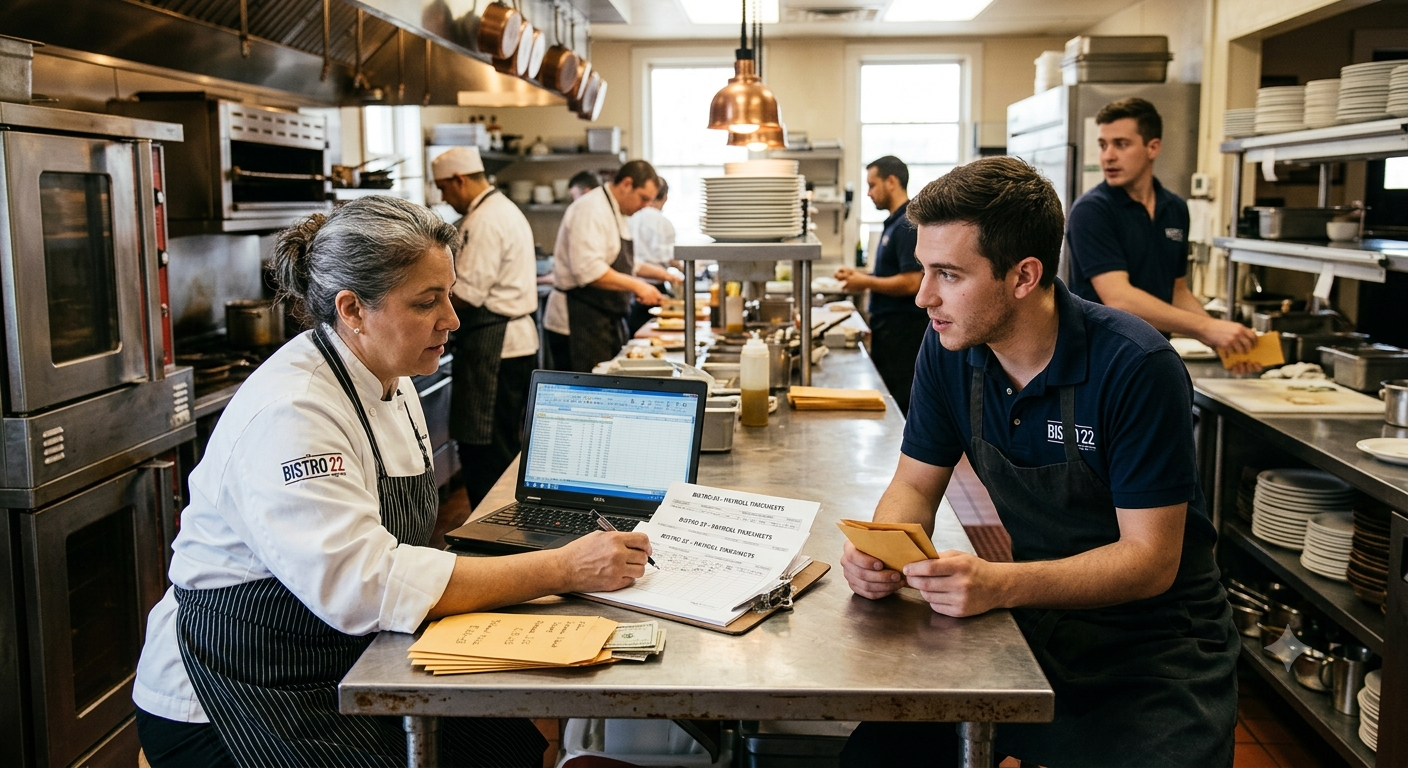
The Onboarding Crunch
Restaurant turnover is famously high, so a new line cook or server needs to be trained and on the schedule fast — not stuck filling out the same paperwork every new hire fills out. The fix is a system that pushes I-9s, W-4s, and state tax forms out digitally before a first shift even starts. For food service specifically, that same system should hold onto food handler cards and ServSafe certifications, and flag them automatically before they lapse.
Picture this: a health inspection lands the same week a food safety certification quietly expired. A good payroll and HR software setup would have flagged the renewal 30 days out — not left it for the inspector to find.

Tips, Splits, and Multiple Job Codes
Servers rarely work one role for an entire shift — someone bussing tables at 5pm might be serving by 7. Add tip pooling, tip credits against minimum wage, and shift differentials for late-night kitchen staff, and manual tracking becomes a liability fast. The right system applies the correct pay rate automatically based on job code and time worked, not a manager's memory at the end of the night.
Finding a Payroll Partner That Fits
A single neighborhood restaurant and a twenty-location fast-casual chain are shopping in the same category but need very different things from a payroll company. A smaller operation might lean on straightforward payroll software for small business use and basic small business payroll tools, while a growing multi-unit group needs the same reliability scaled up — more locations, more job codes, more complexity. The right payroll provider grows with you instead of forcing a switch later. When comparing options, run through this checklist:
LOOK FOR WHY IT MATTERS
Cloud-based payroll software / online payroll Access pay data from any location, any device
Automated payroll Handles tip pooling, tip credits, and shift differentials without manual math
Multi-state payroll Supports multi-location restaurant groups and franchises
Payroll compliance software Keeps you current as tipped-wage laws shift state to state
Payroll reporting software Produces audit-ready reports in minutes, not days
Payroll outsourcing option Hand off payroll processing entirely if you'd rather not run it in-house
Most owners eventually land on a single payroll and HR software platform rather than stitching together separate tools for payroll services, scheduling, and time tracking — fewer logins, fewer sync issues.
Where Chef and Server Pay Gets Complicated
Payroll for chefs usually involves salaried management pay, overtime rules for kitchen staff who work well past 40 hours during a busy week, and shift differentials for closing shifts. Payroll for servers is a different puzzle — tip credits, tip pooling across a shift, and a base wage that has to stay compliant with both federal and state tipped-minimum-wage rules. Without job-code-based tracking, both are easy to get wrong. The right restaurant payroll software allocates pay by role and shift automatically, which keeps cost reporting clean across every location.
What Changes Once the System Is in Place
Managers can see labor cost as a percentage of sales in real time, instead of finding out after the pay period closes.
Coverage holds steady through holiday rushes and weekend peaks because staffing is planned around real data, not guesswork.
Moving a server or cook to cover a different location doesn't create a scheduling or payroll mess.
Tip reporting, break compliance, and certification tracking happen automatically instead of living on a manager's clipboard.
Five Things Worth Insisting On
Integrated payroll that handles both payroll for chefs and payroll for servers without manual workarounds. Mobile access so staff can check hours, tips, and pay from their phone, and owners can spot overtime risk before it hits a paycheck. Job costing flexible enough to split pay by role when staff work more than one position in a shift. Automated compliance that tracks certifications and enforces break rules without a manager having to remember. And leave management that keeps time-off requests from turning into a scheduling scramble during your busiest weeks.
Payroll Questions Restaurant Owners Actually Ask
What does a payroll service actually do?
It calculates wages, files taxes, and issues pay on your behalf — and for restaurants specifically, the better ones also track tip credits and split pay by job code.What's the simplest way to think about how payroll works?
Hours get tracked, the right pay rate and any tips or differentials get applied, taxes get withheld, and pay goes out on schedule. Payroll processing is just that sequence done accurately and on time, every time.What mistakes trip up restaurants most often?
Misapplying tip credits, missing overtime on multi-role staff, and trying to manage multi-state payroll across locations on spreadsheets. A real payroll management system catches these before they turn into compliance headaches.Is payroll software the same thing as HR software?
Not quite — payroll handles wages and taxes, HR covers onboarding, scheduling, and compliance tracking. Combined payroll and HR software keeps both talking to each other instead of living in separate systems.
To get started on compliance peace of mind give us a call at +1 (213) 785-1069